BlogScuba Fabric vs Neoprene: What the Construction Difference Means Before You Sample
Scuba Fabric vs Neoprene: What the Construction Difference Means Before You Sample
May 25, 2026
Table of Contents
They look alike on the hanger — smooth surface, structured hand, a certain weight. But scuba fabric and neoprene come from entirely different supply chains. Specifying the wrong one means the wrong mill, the wrong certification path, and a sampling process that starts over. Here is what to verify before you place a development request.
Why Scuba Fabric vs Neoprene Starts with Structure, Not Surface
The most common confusion in apparel sourcing is treating these two materials as interchangeable variants of the same product. They are not. Scuba fabric is usually developed as a compact double-knit textile on circular knitting equipment, the same production category used for interlock, ponte roma, and other double-knit fabrics. Its knit construction gives both faces a stable surface, but exact face appearance, thickness, stretch and recovery still depend on yarn choice, blend ratio and finishing.
Apparel-grade scuba can be developed in polyester-spandex, rayon-nylon-spandex, or other blended constructions depending on target weight, rebound and surface feel. GSM for apparel-grade scuba often falls around 200–400 GSM, but exact parameters should be confirmed during sampling.
Because scuba is a knit, it is sourced, sampled, and ordered the same way as any other knit fabric: lab dip approval, swatch evaluation, then bulk. Lead times, MOQ structures, and quality-check protocols all follow standard knit textile sourcing practice. Our scuba knitted fabric range covers a variety of compositions and weights available for sampling.
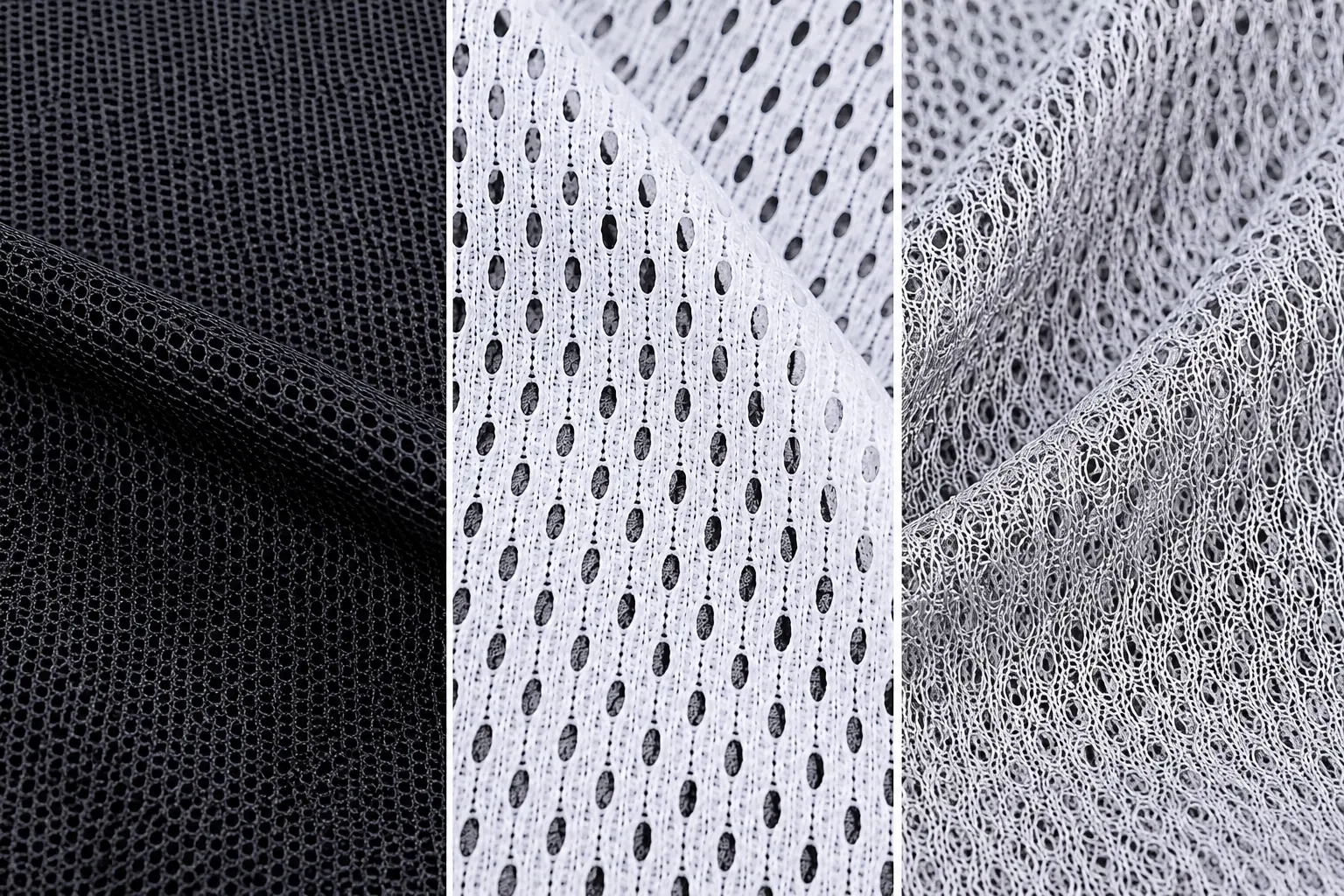
A close-up cross-section of a double-sided scuba knit fabric, revealing layers of interlocking loops
Neoprene Is a Foam Sheet — Not a Knit Fabric
Neoprene — technically polychloroprene — is a synthetic rubber foam produced by polymerizing chloroprene, not by knitting yarn. The base material is a closed-cell foam core, typically laminated on one or both faces with a woven or knit textile (usually nylon or polyester) to make it handleable for cutting and sewing.
This construction difference has direct implications for sourcing. Neoprene is not produced at a knit fabric mill. It comes from specialty chemical fabricators or rubber product manufacturers whose production logic, MOQ structures, lead times, and quality testing protocols are categorically different from textile sourcing. You cannot request a standard GSM spec or a lab dip for neoprene the same way you would for a knit. Thickness is measured in millimeters of foam depth, and performance is evaluated against waterproofing, insulation, and buoyancy criteria — not fabric hand or colorfastness.
The fabric laminated to the neoprene surface — typically nylon or polyester — is responsible for most of the color and texture you see in finished neoprene products. That laminate can be sourced from a knit mill, but the neoprene core itself cannot. Brands that assume neoprene and scuba can be swapped within the same supplier relationship will encounter a sourcing dead-end.
Construction, GSM, Certification — A Side-by-Side Comparison
The table below maps the key sourcing dimensions across both materials. The purpose is not to declare one superior — it is to show why they cannot substitute for each other once procurement is underway.
Dimension
Scuba Fabric
Neoprene
Stretch behavior
Can support 2-way or 4-way stretch depending on knit structure and spandex content
Depends on foam and laminate construction; not specified like knit stretch percentage
Certification path
Textile certification options can be confirmed by fabric lot and supplier scope
Requires separate confirmation from the neoprene/laminated foam supplier
Sampling path
Lab dip, swatch review, shrinkage and stretch checks before bulk
Foam thickness, lamination, color surface and supplier-specific testing need separate approval
A few dimensions deserve emphasis for sourcing teams. First, the certification path should be confirmed by the material category and supplier scope. Scuba fabric is handled as a textile fabric, so compliance documents can usually be reviewed by fabric lot, composition and finishing route. Neoprene needs a separate supplier check because the foam core and laminated face fabric may follow a different documentation path. For brands selling into regulated markets, this distinction should be confirmed before sampling.
Second, stretch behavior: scuba fabric can support 2-way or 4-way stretch depending on the knit structure and spandex content. Neoprene's stretch, by contrast, comes primarily from the laminate layer and foam construction, so it should not be specified like a standard knit stretch percentage.
Third, double knit positioning: scuba sits within a broader category of structured double knit fabrics — alongside ponte roma fabric and standard double knit fabric. All three are knit textiles sourced from the same type of production facility, and all three offer structural stability at differing weights and stretch profiles. Neoprene shares none of this lineage.
Choosing Scuba Fabric vs Neoprene for Your Collection
For most structured apparel applications — fitted dresses, skirts, blazers, and lightweight jackets — scuba fabric is the appropriate material. It produces clean seam lines, resists wrinkling, maintains silhouette through a full day of wear, and can be produced in a wide colour range with standard dyeing processes. The knit construction also means the fabric can be sampled, approved, and reordered through a standard knit sourcing workflow.
Neoprene is the correct choice when the end product genuinely requires waterproofing, thermal insulation, or impact resistance — wetsuits, surfwear, protective orthopedic braces, and similar technical applications. It is not a structural substitute for scuba in fashion apparel, and its manufacturing complexity, limited colour range, and certification incompatibility make it poorly suited for typical branded apparel collections.
One frequently overlooked consideration is dimensional stability after laundering and bulk cutting. For scuba fabric, confirm width, weight, stretch and shrinkage tolerance during sampling instead of relying only on surface hand feel. AATCC TM135 is a useful external reference because it measures length and width changes in fabrics after home laundering procedures. For a more detailed breakdown of how knit construction affects dimensional behavior, see our article on fabric stability in double knit.
If your development brief calls for a smooth, structured knit with four-way stretch that can be sampled and certified to standard textile requirements, the correct material is scuba fabric. If the brief requires a waterproof or insulating foam-core sheet for a technical product, neoprene is the appropriate material — and the sourcing path is entirely separate. Knowing which one you need before development begins prevents the costly mistake of taking one into the other's supply chain.
FAQ
Is scuba fabric the same as neoprene?
No. Scuba fabric is a double-knit textile made from yarn-based blended constructions, while neoprene is a foamed polychloroprene rubber sheet laminated with a textile face. They are produced through different manufacturing processes, sourced from different supplier types, and behave differently in certification, stretch, thickness and bulk ordering. Their smooth surfaces are similar, but they are not interchangeable materials.
Can scuba fabric be supplied with textile compliance documentation?
Yes, certified textile options may be available depending on composition, color, finishing and supplier scope. If your brand needs OEKO-TEX® Standard 100 or another compliance document, confirm the requirement at the sampling stage and request the certificate or test report before bulk approval. Neoprene should be checked through a separate supplier path because its foam-core construction is not sourced like a standard knit fabric.
What GSM range works for scuba fabric in dress and jacket production?
For structured dresses and fitted skirts, scuba fabric in the 220–300 GSM range is commonly used, providing enough body to maintain silhouette without adding unnecessary bulk. For lightweight jackets or outerwear applications, heavier options may be appropriate depending on construction and finishing. These figures are directional — exact weight specification should be confirmed during sampling, as GSM can vary depending on yarn count and finishing treatments applied.
Ready to Source Scuba Fabric for Your Next Collection?
Request a sample from our scuba knit range and confirm composition, GSM, and stretch performance before committing to bulk. Contact us to get started.


 Fabric Comparison