BlogFabric Snagging Test and Dimensional Stability: Pre-Bulk Checks for Knit Apparel
Fabric Snagging Test and Dimensional Stability: Pre-Bulk Checks for Knit Apparel
May 29, 2026
Table of Contents
Quick Answer
Fabric snagging test: Specify ASTM D3939/D3939M for North American buyer requirements, or GB/T 11047 when Chinese testing standards are required by the buyer or test lab. Minimum acceptable grade for outerwear knits is typically Grade 3; finer constructions may require Grade 3–4, depending on end-use.
Dimensional stability: Specify ISO 6330 (EU/international) or AATCC 135 (North America). Acceptable shrinkage tolerance varies by construction and fiber — confirm through sampling, not assumption.
When to run both: At the pre-production sample (PPS) stage — before any bulk fabric is approved or cut.
Two of the most common reasons a knit fabric bulk gets rejected — snag complaints from end customers, and size inconsistency after washing — can both be caught at the sampling stage. Neither test is complicated. The problem is timing: most brands only request them after something has already gone wrong. This article sets out which tests to run, which standards to specify, what results to accept, and exactly where both tests fit in the pre-bulk sequence.
Which Knit Structures Are Most Likely to Fail a Fabric Snagging Test
Knit fabric is built from interlocking loops of yarn. Unlike woven fabric, where threads cross at right angles and lock each other in place, a knit loop is held in position by tension from adjacent loops. When something catches on that loop — a zipper pull, a seat buckle, a jewelry clasp — the yarn can pull free rather than resist. That is a snag, and it is a structural consequence of how knit fabrics are constructed, not a defect that can be fully engineered out through manufacturing alone.
In practical testing programs, the following structures usually deserve closer review before bulk approval:
Terry loop and fleece-back knits carry the highest snagging risk. Exposed loops on one or both surfaces are inherently vulnerable — terry loop knits can show lower snagging grades in mace testing because exposed loops are easier to catch.
1×1 rib structures show moderate snagging risk, particularly along the wale direction where yarn floats between the face and back of the fabric.
Jacquard knits and some open or float-heavy structures can be more vulnerable to yarn pull-out, but open mesh fabrics should be checked with the testing lab before choosing the mace method. Float-intensive structures leave more exposed yarn length between interlacement points.
Standard single jersey and interlock are generally more resistant — the tighter loop structure leaves less exposed yarn — though GSM and yarn type remain influencing variables.
Yarn type matters as much as construction. Fabrics made from textured filament yarns or synthetic blends — polyester, nylon, or polyester-cotton with a high synthetic content — tend to snag more readily than tightly twisted spun yarns, because individual filaments within the bundle are more easily caught and pulled before the structure resists. If your collection includes any fabric with a textured surface, open loop structure, or significant synthetic filament content, specifying a fabric snagging test before sample approval is not optional — it is basic pre-bulk risk management.
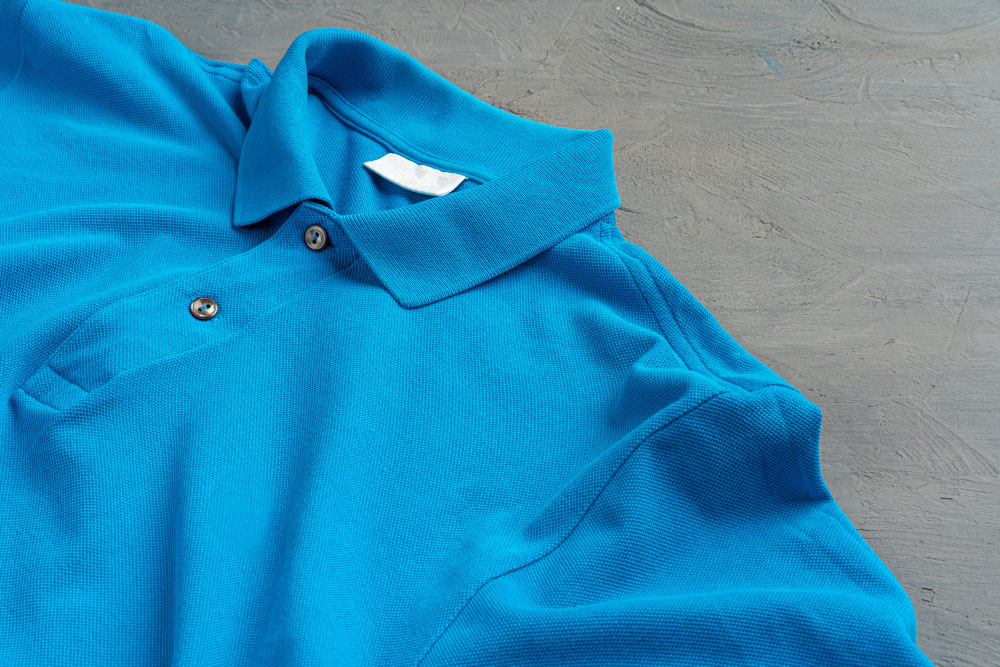
For fabrics with raised surface texture — such as pique knit fabric used in polo shirt production — snagging resistance is a practical quality checkpoint that directly affects garment appearance and durability across multiple wear cycles. The raised mesh structure of a pique creates more exposed yarn surface than a flat jersey, which is why snagging performance should be part of the sample approval criteria for this fabric category.
How to Specify a Fabric Snagging Test — Mace, Bean Bag, and ICI Compared
There are three main standards used globally for snagging resistance testing. Which one to specify depends on your target export market, your buyer's technical package, and the construction of the fabric being tested. Choosing the right standard before sampling begins saves a testing cycle — and avoids the situation where a sample is tested to one standard and then retested to another after the buyer specifies something different.
ASTM D3939/D3939M — Mace Method
This standard is commonly used for snagging resistance evaluation when North American buyer requirements reference the mace method. A spiked metal mace is attached by a chain inside a rotating drum. As the drum turns, the mace contacts the specimen wrapped around the drum surface, creating random catch points that simulate snagging risk during wear. Results are graded on a 1–5 scale, with Grade 5 indicating no visible snagging and Grade 1 indicating severe snagging. Because results are method-specific, do not compare ASTM D3939/D3939M grades directly with Bean Bag or ICI Hammer results. For open mesh or very loose constructions, confirm method suitability with the testing lab before approval.
GB/T 11047
The Chinese national standard for snagging resistance testing is applied to outerwear knit and woven fabrics, particularly those made from synthetic filament and textured yarns. The Mace Method is included as a core test procedure within this standard. Relevant for fabric tested within China before export shipment, or for brands whose certification requirements reference Chinese standards. Test results and grading methodology are structurally similar to ASTM D3939, though procedural details differ.
JIS L1058
The Japanese Industrial Standard for snagging resistance, which includes four distinct test methods: ICI Hammer, Beanbag, Needle-Cloth, and Drum-Rotating. The Beanbag method is most commonly specified by Japanese buyers for outerwear and knitwear categories. If your collection targets the Japanese market, verify with your buyer which of the four methods is required — they are not interchangeable, and results between methods are not directly comparable. The ICI Hammer method, for instance, applies a different mechanical action than the Beanbag and can produce meaningfully different grades on the same fabric.
What to Write in Your Sample Approval Document
Specifying "pass snagging test" gives the mill no actionable instruction. A clear, enforceable specification looks like: "ASTM D3939/D3939M, minimum Grade 3 in both wale and course directions." For finer-gauge knits or garment categories where surface appearance is a primary quality criterion, the minimum may be raised to Grade 3–4 depending on end-use requirements and buyer standards. Both wale and course directions should be tested — some constructions show meaningfully different results between the two directions, and a grade 4 in wale with a grade 2 in course is a failing result, not a mixed one.
If you are unsure which standard applies to your export market, resolve this with your brand technical team before sampling begins. Changing the standard after samples have been cut means running the test again — at additional lab cost, and with the delay of another sample cycle.
For open mesh or very loose constructions, confirm method suitability with the lab before testing, because the mace method may not be appropriate for every open fabric structure.
Dimensional Stability Testing — The Physical Check Most Buyers Add Too Late
A fabric that clears snagging requirements but shifts 8% in width after three washes will generate size complaints at retail. A garment that was graded correctly before cutting becomes inconsistent in fit across sizes after the first laundry cycle. Dimensional stability testing measures exactly that risk — how much a fabric changes in length and width after laundering under controlled conditions. It is the other half of the physical test pair, and it is the check that most often gets skipped at the sample stage because it takes more calendar time than a snagging test, and because brands assume their mill has already accounted for shrinkage in the GSM and finishing spec.
Shrinkage behavior in knit fabric is influenced by fiber composition, GSM, knit construction, yarn twist, and the finishing processes applied — particularly compacting and heat-setting. Two fabrics with identical GSM and composition can behave differently after washing if their construction or finishing sequence differs. This is why a test report from the actual PPS fabric is more reliable than a mill's historical data or a factory's standing specification.
ISO 6330
The international standard for domestic washing procedures used in fabric and garment testing is widely specified for European market compliance. It sets out wash cycle programs, water temperature, detergent type, and load conditions. Results are reported as percentage change in length and width. For a structured overview of how dimensional stability tests are set up and what to look for in a test report, QIMA's dimensional stability testing guide covers the test structure clearly. Because washing machine type, detergent, load and drying procedure can affect results, the approval document should specify the exact wash and dry procedure, not only the standard name.
AATCC 135
The equivalent standard for North American markets, developed by the American Association of Textile Chemists and Colorists. Commonly referenced in US buyer tech packs. The test intent mirrors ISO 6330 — controlled wash cycle, measurement before and after — but wash machine type, water conditions, and program parameters differ. Results from ISO 6330 and AATCC 135 are not directly comparable, so specifying both for a single fabric is meaningless without also specifying which one governs the acceptance decision.
Setting the Tolerance
Acceptable shrinkage tolerance for knit fabrics varies depending on fiber composition, GSM, construction type, and finishing processes applied. As a general reference direction, tolerance specifications for weft knit fabrics often sit in the range of ±3–5% per wash cycle — but this should always be confirmed against your buyer's technical requirements and verified through actual sample testing, not applied as a blanket assumption. Blended fabrics, yarn-dyed knits, and high-Spandex constructions can all produce results outside that range depending on construction and finishing, and the direction of shrinkage (length vs. width) often differs within the same fabric.
The most reliable approach: specify your required tolerance and wash conditions in the sample approval document, request the test report on the PPS fabric, and confirm the result before committing to bulk yardage. Once fabric is cut, sewn, and partially produced, dimensional failures are significantly more expensive to correct.
Knit fabric specimen with marked measurement points shown before and after controlled ISO 6330 wash cycle, illustrating dimensional change assessment
Where Both Tests Fit in the Pre-Bulk Approval Sequence
Both the fabric snagging test and dimensional stability test belong at the pre-production sample (PPS) stage — not after bulk fabric is delivered, and not as an afterthought when customer complaints arrive. The distinction matters because correction options are fundamentally different at each stage.
The standard pre-bulk approval sequence for knit fabric looks like this:
Lab dip approval — color confirmed against the standard before fabric production begins.
Pre-production sample (PPS) request — first bulk-condition fabric sample produced to the confirmed construction spec.
Physical testing on PPS — snagging test and dimensional stability test run at this stage, alongside colorfastness and stretch/recovery checks as required by your buyer's tech pack.
Bulk approval — issued only after PPS test reports meet all specified criteria.
Running physical tests at the PPS stage keeps correction costs manageable. If a fabric fails the snagging test because the yarn type needs adjustment, or fails dimensional stability because the compacting finish is insufficient for the fiber blend, the mill can address it before committing to full production yardage. That correction costs a fabric adjustment and another sample round. The same problem discovered post-bulk means either accepting non-conforming goods, renegotiating pricing downward to account for the defect, or initiating a formal rejection and claims process — all of which carry high cost and lead time implications.
When test results fall below specification, document the deviation formally and in writing, with the test report attached. This documentation feeds directly into the knit fabric quality control protocol — including deviation thresholds, correction request procedures, and the timeline for retest confirmation. Without a formal quality control framework in place, deviation handling defaults to negotiation rather than process, which is slower and more variable.
If a defect reaches bulk and escalation is necessary, test reports on file from the PPS stage significantly strengthen any knit fabric defect claims made against the mill. Without pre-bulk test documentation, it becomes difficult to establish whether the defect was present at sampling or introduced during bulk production — a distinction that determines whether the mill or the buyer carries the cost.
For buyers sourcing multiple knit structures in the same collection, running both tests on each fabric type at PPS prevents one underperforming fabric from stalling the bulk approval sequence for the entire range. If five fabrics are being sampled simultaneously and one fails dimensional stability while the others clear, that single fabric becomes the bottleneck — catching it early keeps the rest of the approvals moving.
Frequently Asked Questions
Which knit fabric types need a snagging test most urgently before bulk?
Fabrics with textured surfaces, exposed loops, float yarns, or a high share of synthetic filament yarns should be tested first. Terry loop, fleece-back, jacquard, mesh-like, and raised pique structures usually carry more snagging risk than compact single jersey or interlock. However, the tech pack should override the general risk ranking. If the buyer specifies a fabric snagging test, run it regardless of construction. The goal is not to guess which fabric may pass, but to document the result before bulk approval.
Do snagging and dimensional stability tests need to be run on every sample, or only specific structures?
Not every development sample needs both tests, but the PPS fabric should be tested when the construction, end-use, or buyer requirement creates risk. Snagging is more urgent for textured, raised, open, or filament-heavy knits. Dimensional stability is important for any size-sensitive garment, especially washable styles in jersey, interlock, pique, rib, or stretch blends. If requirements are unclear, running both tests at PPS is the safer option because correction is still possible before the bulk fabric is cut or delivered. Confirm snagging resistance and dimensional stability specs before committing to bulk. Request a sample from the knit fabric range — or get in touch to discuss test requirements at the sampling stage.


 Technical Know-How