BlogHow Knit Fabric Yarn Count Affects Hand Feel, GSM and Spec Sheet Accuracy
How Knit Fabric Yarn Count Affects Hand Feel, GSM and Spec Sheet Accuracy
May 26, 2026
Table of Contents
Key Sourcing Takeaways
Ne, Nm and Denier are three separate count systems used in knit fabric production — and they follow opposite logic, so a higher number means finer yarn in Ne/Nm but coarser yarn in Denier.
Knit fabric yarn count and GSM are independent variables: two fabrics can share the same GSM and feel completely different if their yarn count, ply or spinning method differs.
sheets for cotton knit fabrics typically show Ne; knitwear and wool constructions use Nm; synthetic knit fabrics (mesh, tricot, power mesh) are specified in Denier.
Before approving bulk, always verify count, ply notation, and spinning method together — not count alone — to ensure hand feels and consistency can be replicated across production runs.
A factory sends you a spec sheet. It reads "30s/1 Ne combed ring-spun cotton" on one line and "75D/72F nylon" on another. Both are knit fabric yarn count notations — but they belong to completely different systems and follow opposite directional logic. Misreading one number at the sampling stage means the bulk you receive may look right on paper and feel wrong in hand. Here is what each system means, where it applies in knit fabric sourcing, and what you need to lock down on the spec sheet before production begins.
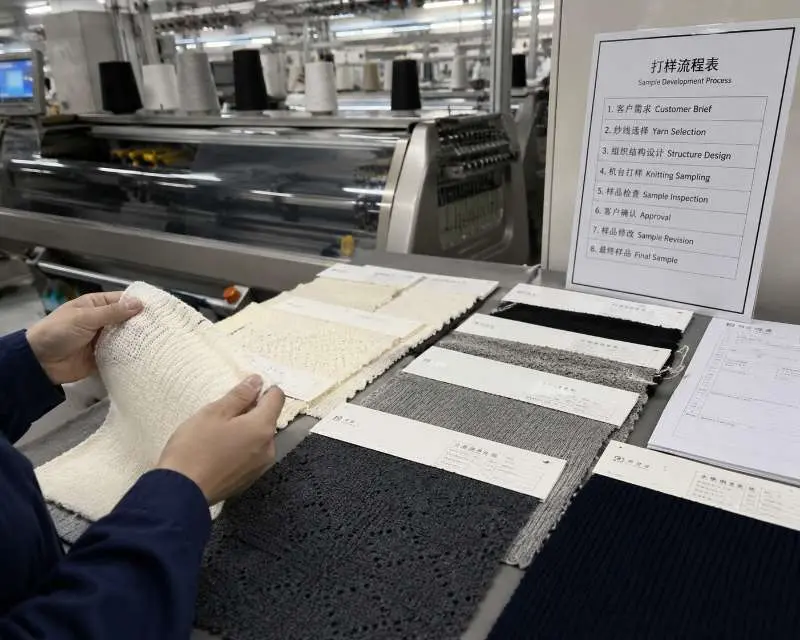
At Runtang Tex, yarn count is reviewed together with GSM, construction and finishing during sample development, especially for jersey knit fabric and nylon-based performance knits where hand feel and repeatability depend on more than finished weight alone.
Three Knit Fabric Yarn Count Systems — and Why They Operate on Opposite Logic
Knit fabric yarn count is expressed through three main systems: Ne (English Cotton Count), Nm (Metric Count), and Denier. Ne and Nm are indirect systems — the count number represents length per unit weight, so a higher number means a finer, lighter yarn. Denier is a direct system — it measures weight per unit length, so a higher number means a heavier, coarser yarn. This inversion is the most common source of spec confusion for buyers reviewing multi-fiber fabric orders.
The three systems also map to different fiber categories and knit product types, which is why a single purchase order for a jersey-knit top and a nylon mesh lining can carry two different count notations side by side.
System
Fiber / Application
Direction
Ne (English Count)
Cotton, cotton blends, jersey, interlock, and French terry
Higher = finer yarn
Nm (Metric Count)
Wool, wool blends, knitwear, cable knit, fine gauge
Higher = finer yarn
Denier (D)
Nylon, polyester, synthetic knit — mesh, tricot, power mesh
Ne Yarn Count in Cotton Knit Fabric: Ply Notation and What Drives Hand Feel
Ne is the count system you will encounter most often when sourcing cotton-based jersey knit fabric, interlock, French terry, and cotton-spandex blends. The number indicates how many 840-yard hanks of yarn make up one pound of material — a higher Ne count means the yarn covers more length per pound, i.e., it is finer.
Ply notation appears alongside the count and is equally important on a spec sheet:
30s/1 — single-ply yarn at Ne 30
30s/2 — two singles of Ne 30 twisted together, giving an effective count closer to Ne 15 in weight and hand feel
Beyond the number and ply, the spinning method determines how the same count performs in bulk. Combed ring-spun yarn removes short fibers before spinning, producing a cleaner surface with better pilling resistance. Carded or open-end (OE) spun yarn retains shorter fibers, yielding a slightly rougher surface at a lower cost. Two fabrics can carry the same Ne count and the same GSM and feel noticeably different if one is combed ring-spun and the other is carded OE.
When placing a fabric order on a spec sheet, the count alone is not sufficient. The minimum spec entry should read: fiber + Ne count + ply + spinning method (e.g., "100% combed ring-spun cotton, 30s/1 Ne"). Without a spinning method specified, the mill selects based on cost, not brand intent.
Nm in Knitwear: How Metric Count Maps to Gauge and Stitch Weight
Nm is the standard count system for wool, wool blends, and specialty fiber knitwear — including cable knit, fine-gauge jumpers, and merino constructions. Like Ne, it is an indirect system: a higher Nm number indicates a finer yarn. Nm measures the number of 1,000-meter lengths per kilogram of yarn.
Knitwear specifications typically express Nm with ply as a compound notation. A label reading 2/48Nm means two plies of yarn each at Nm 48 — the effective single-yarn fineness is Nm 48, but the construction carries the weight and durability of a two-ply structure. This distinction matters for buyers specifying gauge: finer Nm yarns are generally associated with higher-gauge (finer needle pitch) machines, which produce denser, smoother stitch surfaces. Coarser Nm yarns work on lower-gauge equipment and produce the chunky, open texture typical of hand-feel-forward knitwear.
The relationship between Nm and machine gauge is directional, not fixed — always confirm a compatible gauge with the factory at the sampling stage, since yarn count and gauge combinations outside the mill's standard range can affect stitch tension, dimensional stability, and bulk output speed.
Denier in Synthetic Knit: Reading Filament Count Notation on Spec Sheets
A close-up of the nylon knitted mesh fabric, showcasing its monofilament structure and open-loop weave construction
Denier is a direct count system used for synthetic filament yarns — primarily nylon fabric, polyester, and their blends. Unlike Ne and Nm, a lower Denier number means finer yarn. Denier measures the mass in grams of 9,000 meters of yarn, so a 30D yarn is lighter per meter than a 75D yarn.
Spec sheets for synthetic knit fabrics typically pair the Denier count with a filament count, expressed as D/F notation:
75D/72F — 75 Denier yarn composed of 72 individual filaments
40D/36F — 40 Denier yarn with 36 filaments
The filament count affects hand feel and opacity independently of the Denier value. A higher filament count at the same Denier usually creates finer individual strands, a smoother surface and a more matte appearance. A lower filament count at the same Denier can produce a more lustrous surface and firmer filament feel. For power mesh, tricot lining, and sport mesh sourcing, specifying both D and F values in the purchase order is essential. Specifying only Denier leaves the filament structure open to mill discretion, which can cause surface finish inconsistencies between the sample and the bulk.
Same GSM, Different Yarn Count — Why Two Fabrics Can Feel Nothing Alike
Knit fabric yarn count and GSM are commonly treated as interchangeable quality signals. They are not. GSM measures the mass of one square meter of finished fabric — it tells you how heavy the fabric is. Yarn count determines how fine or coarse the yarns that form the fabric are. A fabric's GSM can stay identical while yarn count, stitch density, and finishing vary, producing substantially different hand feel, opacity, and drape.
Consider two single jersey fabrics both specified at 180 GSM. One is knit from a medium-count cotton yarn with a relatively open loop structure and a light brushing finish — it will feel relaxed and slightly textured. The other achieves the same GSM through a finer yarn at a tighter knit density with no finishing — the surface will be noticeably smoother and more compact. The spec sheets may show the same weight but describe two different products.
For bulk repeatability, locking GSM alone is insufficient. A reliable spec entry for reorder consistency should include: GSM range + yarn count + ply + spinning method + knit construction + finishing specification. If these variables are left open, the supplier may choose an available yarn route that meets weight tolerance but does not fully match the approved hand feel.
This is also where knit fabric GSM selection decisions interact directly with count decisions: for a given application, increasing GSM by increasing yarn weight (lower count, coarser yarn) produces a different outcome than increasing GSM by tightening stitch density at the same count. Clarifying which route your factory takes at the sampling stage prevents surprises at bulk approval.
FAQ
My factory's spec sheet only lists GSM with no yarn count. Is that a problem?
Yes, for anything beyond a one-off order. GSM alone does not define the fabric — it only confirms the weight outcome. Without yarn count, ply and spinning method on the spec sheet, construction details may vary between runs while the finished weight still stays within tolerance. If you plan to reorder or need consistent hand feels across colorways, request the full yarn specification in writing before approving the sample.
Can a cotton-polyester blend knit fabric show both Ne and Denier on the same spec sheet?
Yes, and it is worth understanding what each refers to. In a cotton-polyester blend, the cotton component is typically specified in Ne and the polyester filament in Denier. The two counts describe different yarn types within the same fabric construction — they are not directly comparable. When reviewing such a spec sheet, confirm the blend ratio alongside both count values, as shifts in ratio between sample and bulk can alter hand feel even when both individual count numbers remain unchanged.
Runtang Tex produces a broad range of knit fabrics for apparel brands across Europe, North America, and Australia, with sampling support to verify yarn count, construction, and GSM before bulk commitment. Request a sample or get a quote to start your sourcing process.


 Manufacturer Insights