BlogKnit Fabric Quality Control for Apparel Brands: 4-Point Inspection and Shade Band Approval
Knit Fabric Quality Control for Apparel Brands: 4-Point Inspection and Shade Band Approval
May 29, 2026
Table of Contents
Key Sourcing Takeaways
The 4-Point Inspection System, referenced under ASTM D5430, is a widely used test method for visually inspecting and grading fabrics. It helps buyers and suppliers classify fabric defects with a shared penalty-point system, while the final acceptance threshold should still be agreed upon in the purchase order or quality agreement.
Shade band approval should be completed after bulk dyeing and before fabric release, cutting, or garment production — swatches from each roll and dye lot help confirm the acceptable color range before the order moves forward.
Pre-bulk verification covers GSM, dimensional stability, and colorfastness — buyers should request documented test reports, not verbal confirmations, before authorising shipment.
A factory that shares its QC documentation proactively reduces sourcing risk; use inspection reports and lab test results as part of your supplier evaluation criteria.
Receiving a bulk fabric order only to discover shade variation between rolls, or defect clusters that were never flagged — these are avoidable problems. Knit fabric quality control is not a final-stage formality; it is a set of structured checkpoints built into the production timeline that determine whether your order ships correctly. This guide explains the two core mechanisms — the 4-Point Inspection System and shade band approval — and what your sourcing team should verify at each stage.
The 4-Point Inspection System: How Knit Fabric Is Graded
The 4-Point Inspection System, referenced under ASTM D5430, is a widely used method for visually inspecting and grading fabric defects. It is commonly used in fabric quality control because it gives buyers and suppliers a shared way to record defects, assign penalty points, and review roll-level acceptance before shipment.
The system works by assigning penalty points to defects based on their length in the plane of the fabric. Smaller defects attract fewer points; defects above a certain length receive the maximum penalty of four points. No single linear yard of fabric can accumulate more than four points regardless of how many defects appear within that yard — this cap prevents a heavily defective section from distorting the overall roll score.
After inspecting a roll, the total penalty points are converted to a points-per-100-square-yards figure. Rolls that fall below the agreed acceptance threshold are classified as first quality; rolls exceeding the threshold are flagged as second quality or rejected. The acceptance threshold itself is not fixed by the standard — it is agreed between the buyer and the supplier in the purchase order or quality agreement. This is a detail that many sourcing teams overlook: you have the ability to specify your tolerance level, and you should.
A note specific to knitted fabrics: In many knit-fabric supply programs, rolls are managed or priced by weight rather than only by length. When the 4-Point formula is applied, the inspection report should show how roll weight, width, and calculated yardage were handled. Buyers should request both roll weight and inspected yardage, not only a defect count.
Common defect categories in knit fabric inspection include:
Holes and press-offs (structural failures in the knit loop)
Barré and streaks (horizontal or vertical shade inconsistencies caused by yarn tension variation)
Snags and pulled loops (surface damage from handling or machine contact)
Slubs and thick/thin places (yarn irregularities transferred to the fabric surface)
Stains and contamination (wet processing or handling marks)
Each defect type is graded on its size and its impact on the usable fabric surface. Defects in critical zones — across the full width of the fabric, or clustered in a section that cannot be cut around — warrant roll rejection regardless of the points total.
Shade Band Approval: Controlling Color Consistency Before Fabric Release
Shade band approval is a color consistency checkpoint completed after bulk dyeing and before fabric release, cutting, or garment production. It is separate from defect inspection and addresses a different quality risk: whether the approved color range remains consistent across rolls and dye lots.
When a fabric order involves a solid dye color, the dyeing process will produce slight shade variation between different dye lots, and sometimes between individual rolls within the same lot. Shade band approval is the process by which this variation is assessed and either accepted within a defined range or flagged for re-dyeing before bulk production continues.
How the process works:
Swatches are taken from the beginning and end of each roll in a dye lot, then assembled into a shade band card — a physical array that displays the full range of color variation across that lot.
The shade band card is submitted to the buyer or buying house for approval before bulk production is authorised. No bulk cutting or garment production should begin until this sign-off is received.
Swatches are assessed for color consistency under standardised lighting, typically evaluated against the approved lab dip or strike-off from the sampling stage.
If variation falls within the agreed tolerance, the lot proceeds. If rolls fall outside the acceptable shade range, those rolls are segregated — they may be re-dyed, downgraded, or rejected depending on the severity of the deviation.
From a sourcing team perspective, the key requirement is straightforward: request the color Continuity Card as part of your pre-shipment documentation package. This document provides roll-by-roll swatch evidence that the shade range across your order has been reviewed and approved. Verbal assurances about color consistency are not a substitute for documented shade band sign-off.
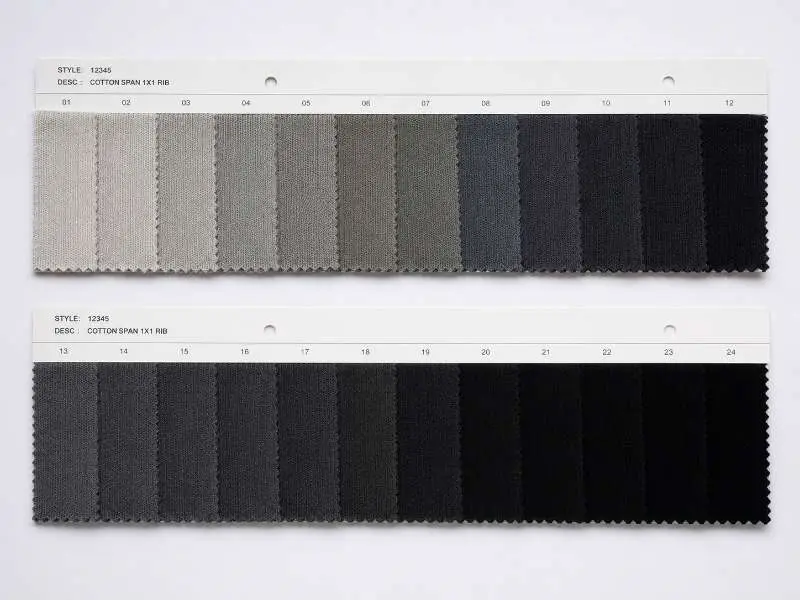
The knitted fabric color swatches, arranged in order of color gradation, showcase the color range of the dye lot
Lot-to-lot variation vs. within-lot variation:
For large orders spread across multiple dye lots, a second layer of shade assessment is required: confirming that the color relationship between lots is acceptable, not just the variation within each lot. This is particularly relevant for knit fabrics that will be cut and assembled into single garments — if two adjacent panels are sourced from different lots, any shade gap between them will be visible in the finished product. Specify in your quality agreement whether lot-to-lot consistency documentation is required alongside within-lot shade bands.
Pre-Bulk Fabric Verification: What Sourcing Teams Should Confirm
Beyond defect inspection and shade band approval, pre-bulk fabric verification covers a set of physical and performance parameters that determine whether the fabric will behave correctly in garment production and end use. These parameters should be confirmed against your tech pack specifications before bulk shipment is authorised — not after the fabric arrives at your cut-and-sew facility.
GSM verification:
Fabric weight is measured in GSM (grams per square metre) and is one of the most fundamental spec parameters in any order. Actual GSM can vary from the target specification depending on yarn consistency, knitting tension, and finishing treatments. A typical tolerance agreed between buyers and fabric suppliers is within a directional range of the target — the specific tolerance should be written into your purchase order. Request the GSM test result from the fabric inspection report; do not assume the weight has been verified unless you have the documentation.
Dimensional stability:
Knit fabrics are more prone to dimensional change after washing than woven fabrics due to the looped structure of the knit. Shrinkage testing — conducted after standard wash and dry cycles — confirms how the fabric will behave in the finished garment. For orders where end-use involves frequent washing (casualwear, activewear, childrenswear), shrinkage data is a critical pre-bulk requirement, not an optional extra. Detailed testing parameters for snagging and dimensional stability tests are covered separately, as these represent a focused physical testing protocol within the broader QC process.
Colorfastness:
Colorfastness testing assesses how well the dyed fabric retains its color under conditions including washing, rubbing (crocking), perspiration, and light exposure. Assessment criteria are typically graded on standard scales; the minimum acceptable grade for each condition should be defined in your quality requirements. For markets with specific regulatory requirements — particularly the EU and North America — confirm that colorfastness grades meet the relevant market standards before bulk approval.
Documentation to request before bulk sign-off:
Fabric Inspection Report (roll-by-roll, with penalty points and pass/fail status)
color Continuity Card (shade band swatches from all rolls and dye lots)
Lab Test Report (GSM, shrinkage, colorfastness — tested against your spec)
fiber content and construction confirmation (to verify the order matches the approved sample)
Each of these documents should be available before you release payment or authorise shipment. A supplier that cannot provide this documentation on request is a supplier that cannot demonstrate their QC process has been completed.
Knit Fabric Quality Control Across the Runtang Production Process
At Runtang Textile, knit fabric quality control is integrated across the production sequence rather than confined to a final inspection stage. Checks occur from yarn intake through to finished roll sign-off, covering the key variables that determine fabric consistency in bulk: yarn specification, knitting tension and machine calibration, dyeing and finishing parameters, and final fabric inspection against order specifications. With an annual production capacity of 20 million yards and a portfolio of knitted fabrics across 20+ categories, maintaining consistent QC protocols across all construction types is an operational requirement, not a marketing claim.
Buyers working with Runtang can receive fabric inspection reports and lab test documentation as part of the standard pre-shipment procedure. For brands with specific quality requirements — custom acceptance thresholds, third-party inspection access, particular colorfastness grades — these parameters can be confirmed at the sampling stage before bulk orders are placed. Learn more about Runtang's manufacturing background and quality infrastructure.
OEKO-TEX® Standard 100 certified options are available across select fabric constructions. Please confirm certification requirements at the time of sampling.
FAQ
What acceptance point threshold should I specify for knit fabric inspection?
There is no single universal threshold. ASTM D5430 provides the inspection method, while the acceptable point level should be agreed upon between buyer and supplier before production. For apparel brands, the purchase order should state the point-assignment option, inspected yardage, maximum acceptable points, and whether any critical defect triggers automatic roll rejection.
At what point in the production timeline does shade band approval happen?
Shade band approval occurs after dyeing is completed and before cutting, shipment release, or garment construction begins. The factory submits color Continuity Cards, assembled from roll-level swatches in each dye lot, to the buyer or buying house for sign-off. This step is not the same as defect inspection; it confirms whether the approved color range can move forward without mixing visible shade gaps in garment panels.
Can I request fabric inspection documentation before bulk shipment from Runtang?
Yes. Runtang provides fabric inspection reports and lab test documentation as part of the pre-shipment procedure. If your programme requires third-party inspection access or specific lab testing against named standards, confirm these requirements during the sampling stage so they can be factored into the production and QC schedule. Contact the team directly to discuss your specific documentation requirements.
Start Your Sourcing Process
Runtang Textile supplies knitted fabrics for apparel brands across Europe, North America, and Australia. Request a sample or get a quote to confirm fabric specs, QC documents, and bulk approval requirements before ordering.

 Manufacturer Insights